- FAAN MD: Financing talks for Lagos airport rail extension reach advanced stage
- Riding the Tidal Wave: How CITA Energies navigated 20 years of jet fuel volatility
- Delta unveils major upgrade to Delta One, redefines premium long-haul travel
- NSIB opens probe into Challenger 604 door separation incident
- Private jet forced into emergency landing in Abuja after door detaches



How conflicts impact Africa, Middle-East global aviation profitability

Africa remains the least profitable aviation region globally. The International Air Transport Association (IATA) forecasts that African carriers will generate just $200 million in net profit in 2026—a marginal 1.3% profit margin compared to the global average of $7.90 per passenger. The conflicts in the continent and the Middle-East have the potential to do more damage to aviation profitability, writes WOLE SHADARE
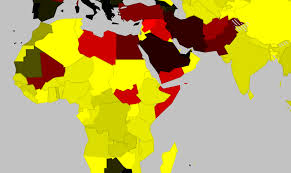
The continent has seen conflicts in Mali, Niger, Burkina Faso, Sudan, Libya, and the Middle East, forcing costly detours for North-South and Afro-European corridors, adding 7% to flight time.

Combined with airspace closures over Libya and Sudan, the situation in Niger significantly widens the no-fly zone across North-Central Africa, making efficient route planning more challenging for airlines.
In 2023, Niger, Nigeria’s neighbour, closed the country’s airspace after rejecting an ultimatum from West African states to reinstate deposed President Mohamed Bazoum or risk military intervention.

Niger’s airspace closure
Niger’s airspace closure, imposed due to political instability after the 2023 coup, significantly disrupted West African air travel, forcing airlines to take longer, costlier routes around the nation, adding hours and miles, increasing fuel burn, flight times (often 1-3+ hours), and ticket prices, impacting flights between Europe, North & Southern Africa, and straining airline budgets and passenger wallets, while also affecting Nigeria and neighboring countries through diverted traffic and lost over-flight fees.
Fuel prices in Africa are already 17% higher than the global average. Geopolitical spikes in oil prices hit African carriers harder due to weaker local currencies.
As of late 2025, Africa accounts for 79% ($954 million) of all blocked airline funds globally, with Algeria being a major contributor.
War-risk premiums have increased by 20–30% for operators flying near conflict-prone Flight Information Regions (FIRs).
Aggressive policy shift
To combat these headwinds, African nations are moving toward aggressive policy shifts. Starting January 1, 2026, 15 West African nations began eliminating non-aviation taxes (solidarity fees, tourism levies). This is expected to cut regional ticket prices by up to 40%, helping to stimulate demand despite rising operational costs.
Countries like Nigeria are focusing on airport certification and intermodal transport linking air to rail/road to improve the hub system and reduce the cost of moving goods and people.
Flights between Europe/North America and Southern/Central Africa now detour, adding significant distance (hundreds of miles) and time (1-3+ hours), increasing fuel consumption, maintenance, and operational expenses for airlines.
These added costs are passed on to passengers, making flights more expensive, especially for routes connecting Nigeria, Ghana, and South Africa to Europe
Airlines like Air France and British Airways reroute via Mali, Algeria, or other African hubs, causing congestion in those alternative airspaces.
Nigerian Airspace Management (NAMA) loses overflight fees, while airlines face increased operational burdens, exacerbating the region’s already high costs.
The ban creates logistical challenges for emergency landings, and while some bans have been lifted, the risk of broader regional closure (Mali, Burkina Faso) adds complexity.
While some sanctions, including flight bans, were later lifted by ECOWAS in March 2024, airlines continue to face ongoing restrictions and operational challenges, with reports of reiteration from Niger.
Dire consequences
The primary implication for air travel is the need to reroute, which results in longer flight times and potentially higher operational costs for airlines.
Flights originating from or terminating in Nigeria are banned from using Nigerien airspace as part of a reciprocal measure following initial sanctions imposed by the Economic Community of West African States (ECOWAS) in 2023.
Middle East crises
In the Middle East, armed conflict has continued with limited interruption across recent decades, but the aviation impact intensified sharply from 2025.
That year’s coordinated strikes between Israel and Iran triggered extensive airspace closures across several flight information regions, forcing dozens of carriers into reactive cancellations and extended rerouting.
Flights between Europe and Asia, already stretched by previous restrictions over Russia and Ukraine, were subjected to further detours.
Passengers encountered multiple-day delays, while aircraft were grounded or rerouted at short notice due to risk escalations across Iraqi, Syrian and Iranian FIRs.
The long-haul route model that underpinned global aviation in the 2010s was not built to withstand these disruptions, as it relied entirely on global access, predictable routings, and neutral airspace.
Aircraft selection, airport planning and alliance structures were based on time efficiency and direct network optimisation. Under that framework, scheduling, fuel planning, crew management, and aircraft utilisation were calculated based on shortest-path trajectories.
However, in the face of geopolitical context and unexpected events, airlines can no longer assume access to static strategic corridors. Rerouting is being built into network planning as a baseline expectation, but not as an exceptional workaround.
The average time extension for east–west long-haul flights affected by Middle East rerouting has exceeded 90 minutes since 2025. In the most exposed corridors, block time increases have reached 210 minutes.
Tracking data show average route lengths increasing by 3,100 km for selected services across Pakistan, Iran, and Saudi Arabia, depending on the staging point. These figures are not temporary spikes. Several carriers have issued permanent schedule adjustments to reflect these detours, accepting longer rotations to maintain continuity.
Operational adjustments
Operational adjustments have been extending beyond individual flights. Entire wave structures at long-haul hubs have been reset to accommodate predictable delays.
Therefore, there has been a permanent reconfiguration of transit flows through major airports in the Gulf, the Levant, and Southern Europe.
Hub connectivity windows have been widened, minimum connection times have increased, and same-day onward options have been reduced. These changes are reducing the competitiveness of indirect long-haul traffic.
Experts said the combined effect of longer routing and fuel margin requirements increasingly distorts the economics of long-haul routes under conflict exposure. Some data based on current detours show a consistent 2.4% increase in fuel uplift per flight.
That uplift requires additional weight to be carried at departure, which forces trade-offs with payload. In practice, carriers are reducing either total passenger load, freight tonnage or both on affected routes.
Aircraft previously operating at full payload now face mandatory restrictions. For instance, A330 and 777 aircraft operating on extended southern tracks out of Europe to Southeast Asia are being capped at reduced take-off weights to comply with diversion contingency fuel margins.
That reduction is translating into revenue suppression. Across selected Asia–Europe corridors, average cargo uplift per flight is down by 14 % compared to pre-2025 figures.
This is materially undermining the economics of routes previously sustained by freight margins despite low passenger yields.
Longer routing not only increases fuel costs but also reshapes crew duty structures and aircraft availability. Where flight times exceed 12.5 hours, an augmented crew is required under European and Asian aviation regulations.
That requirement adds direct cost but also limits rotation flexibility. Crew patterns that previously supported three rotations in five days now support two rotations in five days.
Airlines must allocate additional crew pools or reduce schedule density. In parallel, layover requirements at transit points have increased due to unpredictable recovery buffers.
Starting this year, some airspace access conditions in the Middle East have begun to ease. Specific FIRs that were previously subject to full closures are now operating under restricted routing agreements or altitude limitations.
Selected carriers have resumed limited operations through previously inaccessible zones. However, the easing remains conditional and uneven. No airline has returned to pre-2025 route structures at full capacity, and network planning continues to operate under the assumption of periodic and prolonged closure.

Last line
For airline executives, this uncertainty requires a permanent reassessment of long-haul economic assumptions. Where previously route margins were modelled on shortest-distance scenarios, margins must now be calculated under multiple routing contingencies. Contracts, including the commercial and operational ones, must be structured to reflect the fragility of routing continuity. Conflict volatility may temporarily recede, but evidence of long-term exposure is embedded in network performance.
Google+